SmartThings has announced a redesigned Developer Center that gives partners a single route for building, testing and completing connected-home integrations. The change targets the teams behind devices and services, but it could eventually affect households that rely on routines linking lighting, blinds, heating and other equipment.
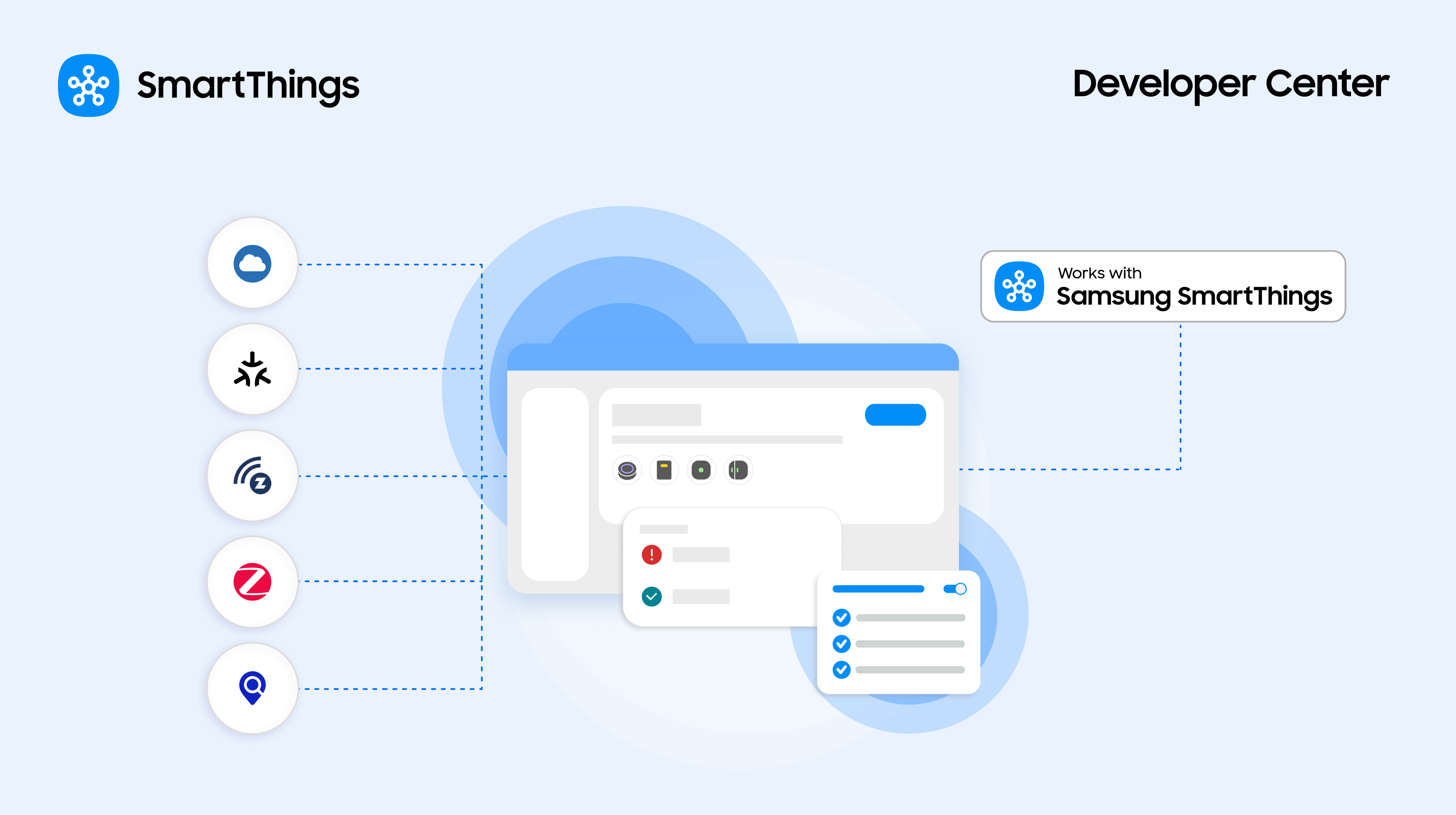
The new console brings device integrations, service integrations and future categories into one self-service path to SmartThings, according to the company’s announcement. That addresses a practical issue in smart-home development: when integration tasks are split across separate processes, teams have less visibility into what is finished and what is still blocking certification.
One workflow from integration to certification
Each integration now follows a defined journey with progress indicators and required steps. A live summary combines device profiles, configuration and support profiles, and test results, giving product, engineering, quality-assurance and sales teams a shared view of the integration’s status.
SmartThings has also revised product creation and certification to guide partners through each stage. The company says this guided flow should reduce errors, limit the back-and-forth needed to correct them and shorten certification time. That is a claim about the partner process, not a guarantee that every device will be certified faster.
Partners can test more devices themselves
Test Suite adds self-test options for connected devices that use the SmartThings Hub or SmartThings Cloud. For most device types, partners can test for Works with SmartThings certification without sending a unit to a laboratory. This may make iteration easier for smaller teams, although the announcement does not say that laboratory testing disappears for every category.
The center supports local integrations using Matter, Zigbee or Z-Wave through a SmartThings Hub. It also covers devices authenticated through a SmartThings Schema app and devices connected directly to SmartThings Cloud with the SmartThings Device SDK. These routes now sit within the same workflow, but the redesign does not make the underlying technologies interchangeable for households.
Service tools are coming later
SmartThings is planning additional service-integration support through SmartThings API Access Apps. The company describes these as a way for third-party web or mobile apps to access SmartThings devices, scenes and locations securely through the API. No launch date has been provided, so this remains a planned capability rather than a feature readers should assume is available now.
Other planned partner tools focus on what happens after certification. Partner Analytics will show partners how their products are used while preserving user privacy. The proposed information includes which devices are often used with theirs in routines, where sales come from and which SmartThings features are used most.
Shareable Routines will let certified Works with SmartThings partners create routines that combine products from different partners for import in the SmartThings app. SmartThings gives a morning routine as an example, with connected blinds opening or lights switching on.
If a user lacks a compatible product, SmartThings may also display recommended devices with Buy links in the app. That could connect a routine to a potential purchase, but the announcement does not establish pricing, availability or a particular retailer.
For households, the immediate change is in integration infrastructure rather than in a newly announced appliance, light or thermostat. The intended benefit is a clearer route for brands to bring automations into one app, while the real-world impact will depend on which partners complete the process and which planned features arrive. SmartThings Find devices will join the simplified path later, and SmartThings says more service-integration improvements are planned in the coming months.